
Lancaster Unclaimed Money Lookup
Lancaster unclaimed money is held by the state of Ohio and managed through Fairfield County resources. As the county seat, Lancaster is the center for both state and county-level unclaimed funds in the area. Dormant bank accounts, uncashed checks, forgotten insurance payouts, and old deposits make up most of the unclaimed funds tied to Lancaster residents. The city sits about 30 miles southeast of Columbus. A quick search costs nothing and takes just a few minutes. ZIP code 43130 covers the Lancaster area.
Lancaster Unclaimed Money Overview
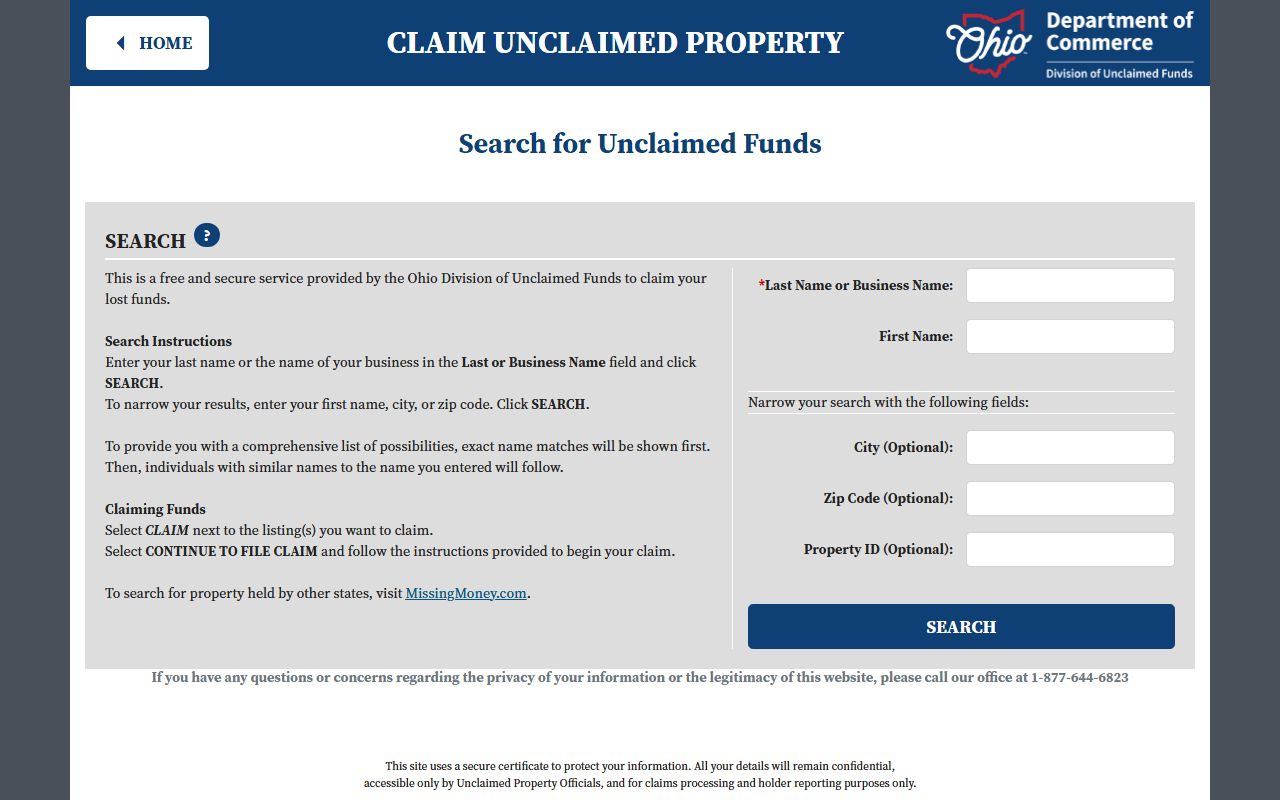
Search Lancaster Unclaimed Funds
The Ohio Division of Unclaimed Funds is where to start. This is the official state portal for all unclaimed money in Ohio. Banks, insurance companies, employers, and other holders send dormant accounts to this database. The search is free. Type your name and filter by Lancaster as the city or enter ZIP code 43130. You can also search by business name.
Lancaster has strong ties to the Columbus metro area. Many residents commute to Columbus for work. When people change jobs or move between Lancaster and other central Ohio cities, they sometimes leave behind bank accounts, deposits, or uncashed checks. Under ORC Chapter 169, businesses must turn over dormant accounts to the state after specific holding periods. Checking accounts go dormant after five years. Wages become unclaimed after one year. Insurance payouts have a three-year window. New Lancaster unclaimed funds get added to the database each year as businesses file their annual reports.
The state system is fully online. Search, file a claim, upload your documents, and check your status at unclaimedfunds.ohio.gov. The Division processed 26,420 claims in 2024 and returned $149.6 million to Ohio residents.
The City of Lancaster handles its own financial disbursements. Contact the city about any municipal funds in your name.
Fairfield County Unclaimed Funds
Lancaster is the county seat of Fairfield County. The Fairfield County Auditor manages the county's financial records, including unclaimed funds from county operations. These are not in the state database. County-held unclaimed money includes vendor payments, tax refunds, court fees, and other government transactions that nobody collected. As the county seat, Lancaster generates a significant share of these unclaimed funds.
ORC 9.39 says all public officials must account for money collected through their office. County-held funds that go unclaimed for five years can be moved into the county general fund. That is a hard deadline. State-held funds are different. The Ohio Division of Unclaimed Funds keeps your money on file forever with no expiration. So when you search for Lancaster unclaimed money, check both systems. The state portal covers most unclaimed property, but the county may hold funds from local government operations that you would not find in the state search.
Use MissingMoney.com as a backup. This national database searches 39 states at once. It is endorsed by the National Association of Unclaimed Property Administrators and can catch items the state search might not display.
Note: Fairfield County holds its own unclaimed funds separate from the state database. Lancaster residents should search both to cover everything.
Claiming Lancaster Lost Money
The claim process is free. Never pay someone to file for you. Search the database first. Find your match. Then get your documents together. You need a valid photo ID, proof of address, and your Social Security number. A W-9 form is standard. Claims over $3,000 may need notarization. If you are claiming on behalf of a deceased relative, you will need a death certificate, probate paperwork, and proof of your relationship to the original owner.
The How to Claim page has full instructions for every claim type. File online or send your forms by mail to the Department of Commerce at 77 S. High St. 20th Floor, Columbus, Ohio 43215. Claims are reviewed within 120 days. Track yours at the Claim Status Lookup page. The deceased owner guide covers estate claims.
The average Ohio claim is about $4,000. Some run much higher. The Division encourages Lancaster residents to search each year. Businesses file new reports annually, so the database keeps growing. A search that turned up nothing before could show results now.
Lancaster Unclaimed Money Types
Unclaimed funds in Lancaster come from many sources. Dormant savings and checking accounts are the most common. Then there are uncashed payroll checks, old insurance benefits, forgotten utility deposits, undelivered stock dividends, and safe deposit box contents. Lancaster's growing connection to the Columbus metro area means more workers commute in and out. Job changes and relocations create situations where pay, benefits, and deposits go uncollected. That all turns into unclaimed money over time.
ORC 169 sets the rules. Lancaster businesses must review their records each year and try to reach owners of dormant accounts worth $50 or more. If they cannot find the owner, the funds go to the state. Penalties for failing to report can reach $100 per day plus 1% monthly interest under ORC 169.03. Life insurance proceeds become dormant three years after the insured person dies. Security deposits have a one-year dormancy period. IRA and Keogh retirement accounts go dormant after three years of inactivity. Traveler's checks have the longest wait at 15 years. The Division adds new listings each year, so check back regularly.
Nearby Cities With Lost Funds
If you have lived or worked near Lancaster, search these cities for unclaimed money too.
Columbus is about 30 miles northwest in Franklin County, which holds $343.1 million in unclaimed funds. Newark is the Licking County seat to the northeast. Springfield sits in Clark County to the west. The state database covers all of Ohio, but each county holds its own pool of unclaimed funds from local government operations. Search every county where you have lived or worked.